Where to Live for the Best International Schools in Barcelona (Areas & Commute Times)
Relocating with kids adds a completely different layer to choosing where to live in Barcelona. This guide connects the best international schools Barcelona families most often ask about with the neighborhoods that make everyday life smoother. In particular, the right home base can dramatically reduce school-run stress while still giving you walkability, parks, and an easier family routine.
Along the way, you’ll find typical commute times by car and public transport, practical neighborhood notes, and direct links to deeper area guides. As a result, it becomes much easier to balance school logistics with the kind of daily lifestyle your family actually wants.
How to choose your base (schools + daily life)
For most relocating families, the school itself should come first. However, once the shortlist is clear, the real decision becomes how that school fits into the rhythm of your week. The best area is rarely just the closest one; instead, it is the one that keeps school runs manageable while supporting work, errands, sports, and family downtime.
- Time budget: aim for a reliable door-to-door commute under 30 minutes, and test the route at real drop-off and pickup times before signing
- Transit vs driving: many schools offer buses, while FGC, metro, and last-mile walking often work well; meanwhile, peak-hour driving can easily double journey times
- Everyday rhythm: choose an area that fits your full week, including groceries, healthcare, sports, parks, and your own commute
- Value vs proximity: areas closest to schools often command higher €/m², whereas a slightly longer route can improve light, outdoor space, or budget fit
As a practical rule, shortlist the schools first and then choose the exact streets. Start with our full school roundup: Best International Schools in Barcelona. If you are still learning the city, it also helps to review Choosing a neighborhood in Barcelona alongside our safety guide: Is Barcelona a safe place to live?.

Near BFIS — Benjamin Franklin International School
For BFIS, most families naturally gravitate toward Upper Gràcia and Sarrià–Sant Gervasi, especially Bonanova and Tres Torres. These areas combine quick access with quieter, village-like streets that work well for school-age children. If you want indie cafés, plazas, and a short school run, Gràcia is often the most lifestyle-friendly choice. Meanwhile, buyers prioritizing larger floorplans, concierge buildings, and a more premium residential feel usually lean toward Sarrià–Sant Gervasi.
- Typical commute: 10–20 min drive off-peak; 20–35 min at peak, while FGC into Sarrià plus a 10–15 min walk is also common
- Housing notes: elevators are not universal in older stock, whereas top floors often deliver the best light
By contrast, families targeting ASB or St. Peter’s usually think more west than central.
Near ASB — American School of Barcelona & St. Peter’s School (Esplugues / Sant Just)
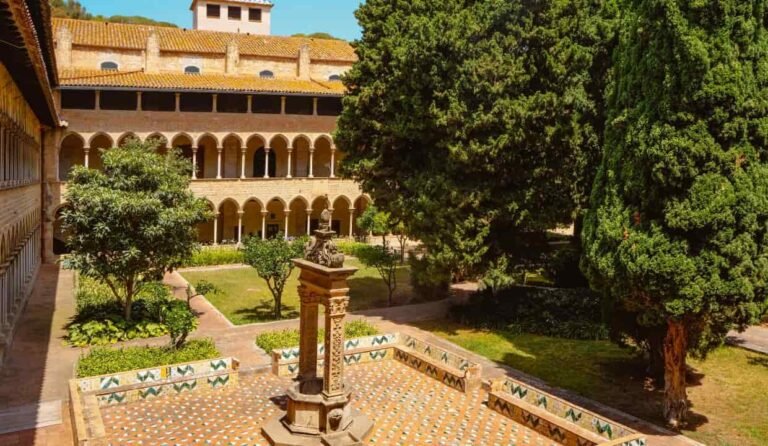
In this case, west-side Barcelona neighborhoods such as Les Corts and Pedralbes, together with nearby Esplugues and Sant Just, tend to make the most sense. If you still want city living while keeping the school run efficient, Les Corts is usually the easiest balance. On the other hand, Pedralbes feels greener, quieter, and more premium, although pricing rises accordingly.
- Typical commute: 10–20 min drive off-peak; 20–35 min at peak, while tram and bus routes from Diagonal can reduce parking stress
- Housing notes: newer buildings often include parking and terraces, whereas Pedralbes typically offers more greenery and larger homes
Further north, Hamelin-Laie often suits families who want modern coastal living.
Near Hamelin-Laie International School (Montgat) & Coastal North
For Hamelin-Laie, families often prefer the seafront and northeast districts where the coastal route feels easy and predictable. In practice, Poblenou, Diagonal Mar, and wider Sant Martí offer the smoothest balance of commute, beach lifestyle, and newer family-oriented buildings. If modern amenities and beach access matter most, Sant Martí is usually the strongest place to begin.
- Typical commute: 15–25 min drive off-peak; 25–40 min at peak, while the R1 from El Clot or Arc de Triomf works well for older students
- Housing notes: newer towers often include pools, parking, and play areas, whereas older Poblenou blocks feel more local and neighborhood-driven
Commute snapshots (typical ranges)
To make comparison easier, these are the most common commute ranges families usually test first.
- Gràcia → BFIS: 10–20 min drive off-peak; 20–30 min FGC + walk
- Les Corts (Diagonal) → ASB/St. Peter’s: 10–20 min drive off-peak; 20–30 min tram/bus
- Poblenou/Diagonal Mar → Hamelin-Laie Montgat: 15–25 min drive off-peak; ~25–35 min via R1 including transfer
Naturally, times vary by traffic, school start times, and the exact home address, so it is always worth testing the route in real conditions.
Family neighborhoods to consider
Ultimately, the right family neighborhood depends on whether you prioritize community feel, parking, beach access, or the shortest possible school run.
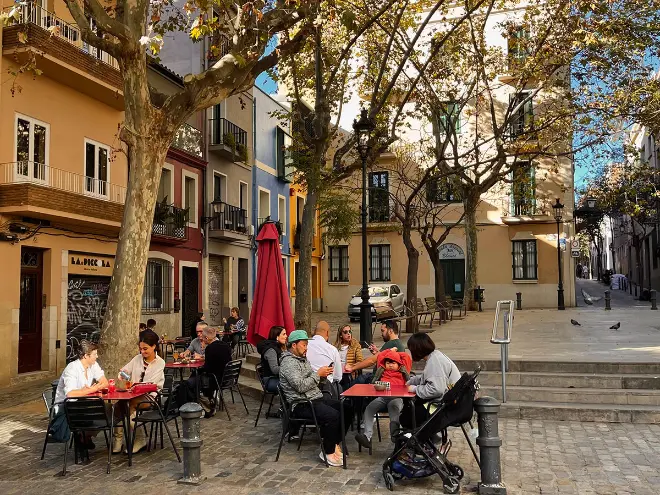
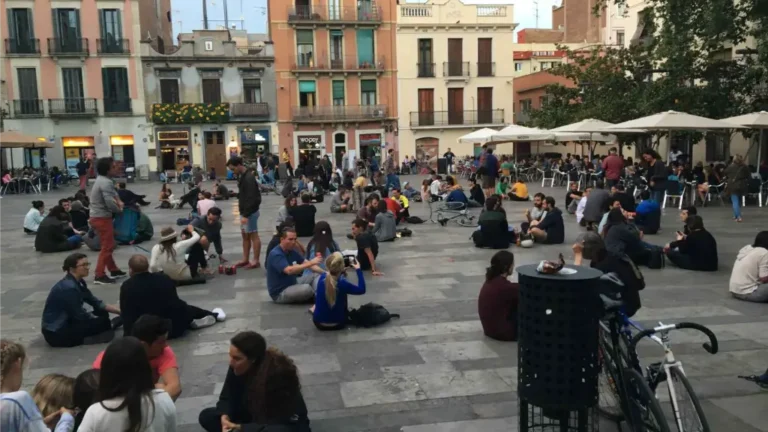
- Gràcia — plazas, pedestrian streets, and a strong community vibe
- Les Corts — calmer buildings with lifts, parking, and quick westbound access
- Sant Martí — modern buildings, coastal lifestyle, and easy links north to Montgat
For extra peace of mind, parents often also review our safety overview: Is Barcelona a safe place to live?.
FAQ — International schools, calendars & commutes
When should we apply?
Most international schools accept applications year-round but fill key grades early. For August/September entry, aim to apply between October and February. Mid-year places depend on availability.
Which curricula are common in Barcelona?
You’ll see the IB pathway (PYP/MYP/DP), American High School Diploma with AP options, and British curricula (IGCSE/A-Level). Some bilingual schools blend Spanish curriculum with strong English.
Do schools offer bus services?
Many do, especially BFIS/ASB/St. Peter’s; routes change yearly based on demand. Families often choose a home close to a bus stop to keep mornings simple.
How long are typical school commutes?
Under 30 minutes door-to-door is a realistic target. West-side schools (ASB/St. Peter’s) pair well with Les Corts/Pedralbes; BFIS with Sarrià–Sant Gervasi or upper Gràcia; coastal Hamelin-Laie with Sant Martí/Poblenou/Diagonal Mar. Always test peak-hour routes.
Will our child need Spanish or Catalan?
No for admission at most international schools, though Spanish/Catalan become part of the timetable. Strong language programs help kids integrate socially and locally.
For school-by-school details (age bands, languages, fees), see our main guide: Best International Schools in Barcelona.