
Eixample
Broad avenues, classic apartment buildings and central city life across several distinct neighborhoods.
Consider: compare the exact street, bedroom orientation and building access.
Explore Eixample →Barcelona Home Hunter
The neighborhood guide
From Eixample and Gràcia to Poblenou, Sarrià and El Clot: compare the character, practical trade-offs and detailed guides for the areas you’re considering.
Broad avenues, classic apartment buildings and central city life across several distinct neighborhoods.
Consider: compare the exact street, bedroom orientation and building access.
Explore Eixample →Market life, cafés and an urban neighborhood atmosphere on the western side of Eixample.
Consider: check evening activity beneath and around the apartment.
Explore Sant Antoni →Historic streets, independent shops and a lively setting for people drawn to the old city.
Consider: inspect natural light, stairs and nighttime noise carefully.
Explore El Born →Medieval surroundings and central Barcelona’s cultural life close to the front door.
Consider: test the specific street at different hours and check building access.
Explore the Gothic Quarter →A varied central neighborhood with cultural institutions and busy street life.
Consider: assess individual streets and buildings rather than treating the area as uniform.
Explore El Raval →Neighborhood streets, former industrial areas and access to Barcelona’s eastern waterfront.
Consider: proximity to the beach and the feel of the surroundings vary considerably by address.
Explore Poblenou →A compact seaside neighborhood between the old port and the beach.
Consider: check usable space, lift access and seasonal street activity.
Explore Barceloneta →Squares, local shops and a distinctive neighborhood identity north of Eixample.
Consider: a lively square and a quiet bedroom do not always come together.
Explore Gràcia →An option to investigate if you prefer a residential setting beyond the central city.
Consider: walk the exact routes to transport and shops, including any hills.
Brief overview · No dedicated guide linkedA residential base with local services and connections across western Barcelona.
Consider: compare main-road frontage with quieter interior streets.
Explore Les Corts →A village-like historic centre within a wider residential part of the city.
Consider: test your school or work journey from the specific address.
Explore Sarrià →A western residential option for searches prioritizing space and a less central setting.
Consider: check walking distances and how much you would rely on transport.
Explore Pedralbes →Local shopping streets and a residential base around a major transport hub.
Consider: compare station proximity with traffic, noise and your preferred street atmosphere.
Brief overview · No dedicated guide linkedA neighborhood between Paral·lel and Montjuïc, with residential streets and dining spots.
Consider: check gradients, evening activity and lift access.
Explore Poble-sec →A local neighborhood east of Eixample with everyday shopping and transport connections.
Consider: compare quieter streets with homes facing major roads or infrastructure.
Explore El Clot →A residential area worth including when broadening a search beyond the best-known central neighborhoods.
Consider: test the commute and the services around the actual property.
Explore Navas →A historic neighborhood centre and local shopping streets in northeastern Barcelona.
Consider: distinguish the neighborhood from the larger district when reviewing listings.
Brief overview · No dedicated guide linkedThese are browsing groups, not official district boundaries or rankings. Eixample is a district; El Born is a familiar name within Sant Pere, Santa Caterina i la Ribera. Always compare the exact address, street and building.
Widen your shortlist
Beyond the featured guides, these names may appear in your property search. This alphabetical index gives you a starting point for locating them. It is a selection, not a complete list of Barcelona’s neighborhoods.
The search above filters the featured cards only. Return to the neighborhood guides ↑
Turn your shortlist into a comparison
Choose two or three neighborhoods from the directory above. Score them against the same budget, daily journeys and housing requirements. These are your own ratings—not a ranking of Barcelona’s neighborhoods.
1 = poor fit · 3 = workable · 5 = strong fit. All five criteria carry equal weight. An unmet essential stays flagged, regardless of the total.
These totals reflect your ratings, not an independent assessment of the areas. A high score cannot cancel out an unmet essential. Keep unresolved questions on your viewing checklist.
Use the same budget and requirements for every area. Assess comfort and access at the addresses you’re actually considering. This tool does not save your entries: refreshing or leaving the page clears them.
To compare manually, write down two or three areas and score each from 1 to 5 for housing fit, regular journeys, daily essentials, comfort and access, and personal fit. Record any unmet non-negotiable separately. The interactive version requires JavaScript.
Explore your Barcelona
Browse the parts of the city that interest you. Follow the linked names for detailed guides, or expand each group to discover more areas.
Start with Eixample and its neighborhoods for a search centered on everyday city connections.
Explore the old city if historic surroundings and street-level activity belong in your daily routine.
Compare different versions of coastal living, from Barceloneta to the eastern waterfront.
Give these distinct areas a closer look if local shops, familiar streets and neighborhood routines lead your brief.
Compare the western and upper neighborhoods around your school, work and household needs.
Extend your shortlist across eastern and northern Barcelona before deciding where your requirements fit.
These are browsing groups, not rankings or official district boundaries. Some familiar names describe wider areas: Eixample is a district, for example, while El Born is part of Sant Pere, Santa Caterina i la Ribera. Always check the exact address when comparing homes.
You could also compare Badalona, L’Hospitalet de Llobregat, Esplugues de Llobregat, Sant Just Desvern or Sant Cugat del Vallès. Treat each as a separate location choice and test your complete door-to-door journey before extending the search.
Continue Exploring Barcelona
Once you know what matters to you, the next step is seeing how those priorities translate into real Barcelona neighborhoods.
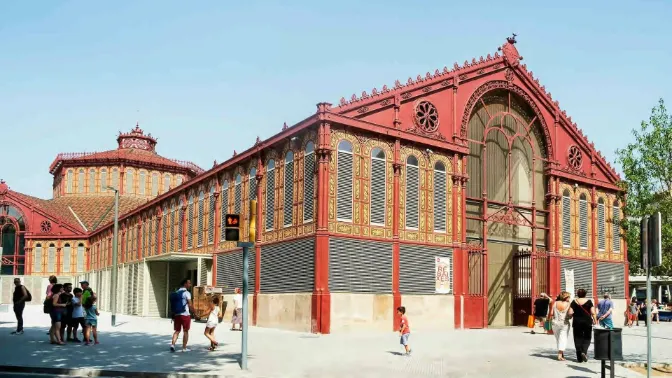
Sant Antoni
Market life, cafés, classic Eixample streets and excellent connections without feeling overwhelmed by tourism.
Explore Sant Antoni →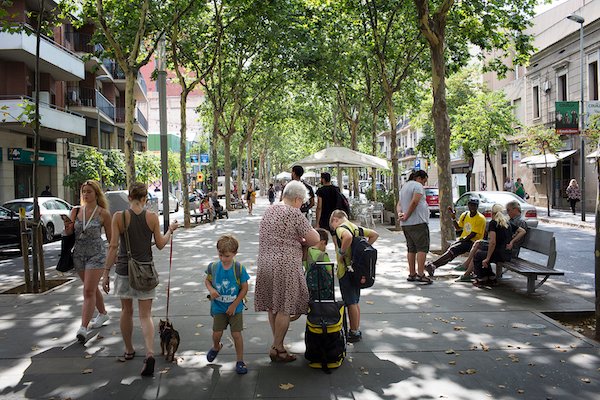
Poblenou
Wider streets, a strong local identity and a different Barcelona rhythm for people who want breathing room without leaving the city.
Explore Poblenou →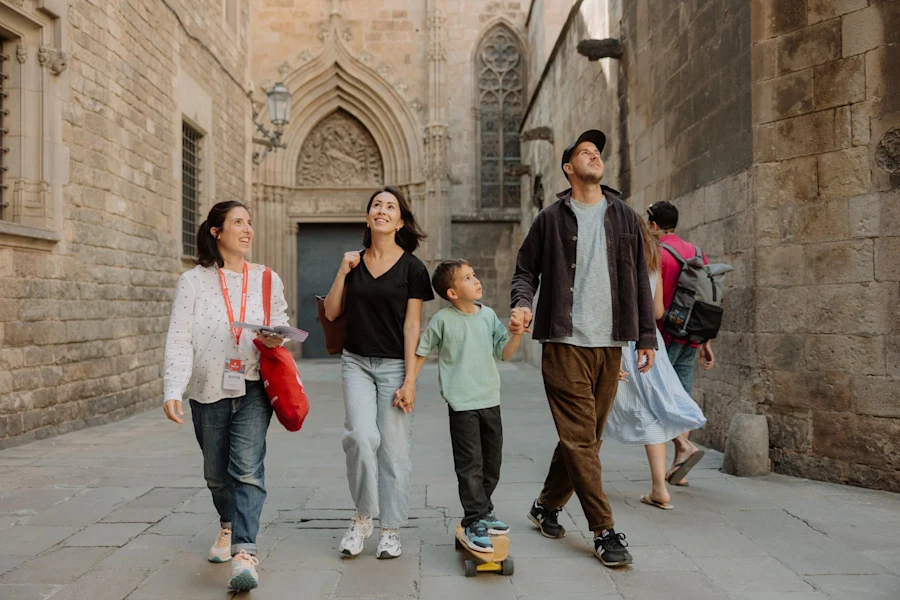
Family-Friendly Barcelona
Compare neighborhoods through schools, green space, transport, community and the routines that shape family life.
Explore the Family Guide →Before choosing a property
Use your shortlist to choose where to look, then assess each property on its own merits. Two homes a few streets apart can offer very different daily experiences.
Visit during the day and evening. Check traffic, deliveries, nearby terraces and activity below the bedroom windows. Listen inside with windows open and closed.
Notice which rooms face the street or an interior courtyard, what blocks the light and how the rooms connect. Compare usable space with the furniture and routines the home needs to accommodate.
Check entrance steps, lift access and shared areas. Ask about planned works and maintenance issues. For a purchase, have the relevant building records and potential costs reviewed by your advisers.
Try the journey to transport, groceries and regular destinations. Include crossings, hills and the final walk home. Test the commute at the time you would actually make it.
Keep a short note after each viewing: what works, what needs checking and which requirement you would be compromising. Use the same questions for every property.
Viewing from abroad? Explore private home tours →Narrowing your shortlist
Start broadly, then choose two or three areas for closer investigation. Compare real properties within the same budget and test your regular journeys. Expand the search if those areas cannot meet your essential requirements.
Compare current listings with similar size, condition, furnishings and contract type. For purchases, separate the asking price from your total acquisition budget. For rentals, account for utilities and upfront costs as well as the monthly rent.
Begin with realistic school options, work locations and your children’s daily needs. Use the family neighborhood guide to explore possibilities, then check the actual journeys before committing to a home.
Renting can help if ordinary life in Barcelona is still unfamiliar. If you already know your preferred location and requirements, another move may add little value. Weigh what you would learn against the cost and disruption of temporary housing.
Yes. We can discuss your budget, regular destinations and housing requirements, then build a practical shortlist. For a specific property, private viewing support can help you assess the home and its surroundings before travelling.
Talk directly with Frank
Tell me which neighborhoods caught your attention, whether you are buying or renting, and your budget and timing. I’ll help you assess the options and shape the property search.
Elegant • Central • Cosmopolitan
Barcelona's grand boulevard district, where modernist architecture, world-class dining, and excellent connectivity create one of the city's most sophisticated places to live.
Elegant • Residential • Family-Friendly
Barcelona's village within the city, where leafy plazas, independent cafés, and a vibrant creative spirit make every day feel distinctly local.
Modern • Coastal • Creative
Barcelona's creative seaside neighbourhood, where independent cafés, broad avenues, and the Mediterranean shape everyday life..
Historic • Lively • Authentic
Behind its medieval streets and hidden squares, El Born blends history, independent boutiques, lively cafés, and one of Barcelona's most distinctive atmospheres, making it ideal for buyers seeking character and city life.
Quiet • Luxury • Authentic
Sarrià blends the charm of a traditional Catalan village with the comfort of modern city living. Quiet squares, independent boutiques, excellent schools, and a strong sense of community make it one of Barcelona's most desirable neighborhoods for families and professionals.
Trendy • Local • Walkable
Centered around its iconic market, Sant Antoni combines tree-lined streets, independent cafés, acclaimed restaurants, and a relaxed neighborhood atmosphere. Popular with young professionals, families, and creatives, it offers an authentic Barcelona lifestyle just minutes from the city center.
Foodie • Cultural • Relaxed
Poble-sec offers one of Barcelona's best balances between authentic neighborhood life and city convenience. Independent cafés, local tapas bars, tree-lined streets, and immediate access to Montjuïc make it popular with creatives, young professionals, and buyers looking for excellent value close to the city center.
Elegant • Residential • Well Connected
Les Corts offers broad tree-lined avenues, elegant apartment buildings, and one of Barcelona's most comfortable residential lifestyles. With excellent shopping, parks, schools, and transport connections, it's an ideal choice for professionals, families, and buyers seeking convenience without sacrificing tranquility.
Exclusive • Elegant • Prestigious
Pedralbes is Barcelona's most prestigious residential neighborhood, known for its elegant villas, luxury apartments, international schools, and peaceful, tree-lined streets. Popular with executives, diplomats, and international families, it offers exceptional privacy while remaining just minutes from the city center.
EXCELLENT Based on 25 reviews
 Posted on Google
 Randy CastañedaFrank from Barcelona Home Hunter guided us through the entire buying process in Spain and helped us every step of the way.Posted on Google
 Ian BritezBarcelona Home Hunter changed the way we saw property buying in Spain. Frank represented us as buyers, ngotiated strongly, and provided honest feedback at every stage.Posted on Google
 Melanie MartinezIt eliminates wasted time, local market uncertainty, and hidden costs for the foreign investor.Posted on Google
 Juan EspañaWe needed expert guidance, and our agents provided it. Their professionalism and extensive experience in the sector made a significant difference. The service is highly recommended; they were always attentive and I wholeheartedly recommend them to buyers.Posted on Google
 Lindsay AlvaradoEntiende perfectamente el proceso de compra y siempre antepuso nuestros intereses. Un agente confiable y excepcionalPosted on Google
 samuel lugoWe neeeded an expert guide, and our agent was just that. HHer professional manner and deep real estate experience made all the difference. The agent is incredibly trustworthy and made a stressful process seem simple. Highly recommended to any buyerrPosted on Google
 anoniblack oficialAs my buyerr's agent, it was the best decision hHer extensive real estate experience, combined witth frienndly service, made the entire process enjoyablePosted on Google
 Rogger RetoTop-notch service, super professional and helped me navigate the Spanish legal stuff seamlesslyPosted on Google
 Yadhira SanchezWorth every penny. They are experts in real estate and found my dream home in the cityPosted on Google
 Machuca Recéndiz Michelle AlejandraI can’t say enough good things about this real estate agent! They are reliable, knowledgeable, and truly care about their clients.Showing our latest reviewsVerified by TrustindexTrustindex verified badge is the Universal Symbol of Trust. Only the greatest companies can get the verified badge who has a review score above 4.5, based on customer reviews over the past 12 months. Read more
You cannot copy content of this page
WhatsApp us