Is Barcelona a safe place to live?
From The BHH Journal
Notes on buying property and living well in Barcelona.
Edition 006 Barcelona Safety Edition August 2026
Safe enough to relax. Busy enough to pay attention.
Daily Life · Personal Safety · Street Awareness
Barcelona feels significantly safer to me than any large or medium-sized American city. The risk that shapes daily behavior here is usually not violence. It is somebody noticing the phone you stopped watching.
I do not organize my life in Barcelona around fear of road rage, gun violence, gangs or arguments suddenly becoming dangerous. People walk, take public transport, sit in plazas and return home late without treating the city as a constant threat.
Barcelona does, however, have a highly developed ecosystem of opportunistic theft. Visitors who confuse a relaxed atmosphere with permission to stop supervising their belongings can become easy targets very quickly.
Violence is not the background noise of daily life.
The kinds of risks that shape behavior in many American cities do not dominate ordinary Barcelona life. Residents are not constantly calculating whether another driver, stranger or political argument may become armed or violent.
Your belongings remain your responsibility.
Phones on terrace tables, handbags behind chairs, wallets in back pockets and unattended beach bags create opportunities that an experienced thief can use in seconds.
Barcelona is socially relaxed without being careless—and politically expressive without making disagreement feel personally dangerous.
Spanish public life does not feel driven by the same performative toughness or armed “macho” culture that can make an ordinary disagreement in the United States feel unpredictable.
Political disagreement certainly exists. So do marches, demonstrations and strikes. In fact, Barcelona protests much more visibly and frequently than many American cities.
But most demonstrations are organized, public and remarkably well behaved. They may interrupt traffic or transport, but they rarely cause residents to treat civic participation itself as a personal safety threat.
Residents learn the unwritten rules.
I have never personally been pickpocketed, robbed or threatened in Barcelona. A close friend, however, had her phone taken directly from her hand.
When groups of tourists visit, it is surprisingly common for at least one person to lose a phone, purse or wallet—even after being warned repeatedly.
Many people arriving from suburban environments place a phone or handbag on a terrace table, hang a purse behind a chair or leave belongings exposed while checking directions.
Long-term residents rarely make those mistakes. We keep bags closed, maintain physical control of valuables and notice when somebody unexpectedly enters our personal space.
Barcelona does not require paranoia. It requires habits.
Yes, Barcelona is a safe place to live. Just do not mistake feeling safe for permission to stop paying attention.
Use well-lit streets late at night, avoid unnecessary solitary walks through empty areas and keep physical control of your phone, wallet and bag. Those habits quickly become automatic—and leave plenty of room to enjoy the city without fear.
Read the Numbers Properly
Barcelona’s crime total does not describe one kind of danger.
A stolen phone, a violent robbery and a homicide all enter the broader conversation about crime. They do not create the same risk, require the same response or tell you the same thing about ordinary life in the city.
Theft represented roughly half of Barcelona’s recorded conventional crime during the period.
Barcelona is not free from confrontational crime. It should not be described as though serious incidents never occur.
Ten were recorded in a municipality of roughly 1.7 million residents during the first nine months of 2025.
Barcelona has a real crime problem—but much of its volume is concentrated in property theft rather than lethal violence.
Between January and September 2025, Barcelona recorded 115,439 conventional criminal offences. More than 58,000 were classified as theft.
That helps explain an experience that can initially sound contradictory: residents may describe Barcelona as exceptionally safe while the city still produces a large recorded-crime total.
They are often describing personal safety—the ability to walk, use public transport, sit in public spaces and live without persistent fear of serious violence. The crime total is heavily influenced by what happens to unattended or poorly controlled possessions.
Statistics describe incidents. They do not describe every street.
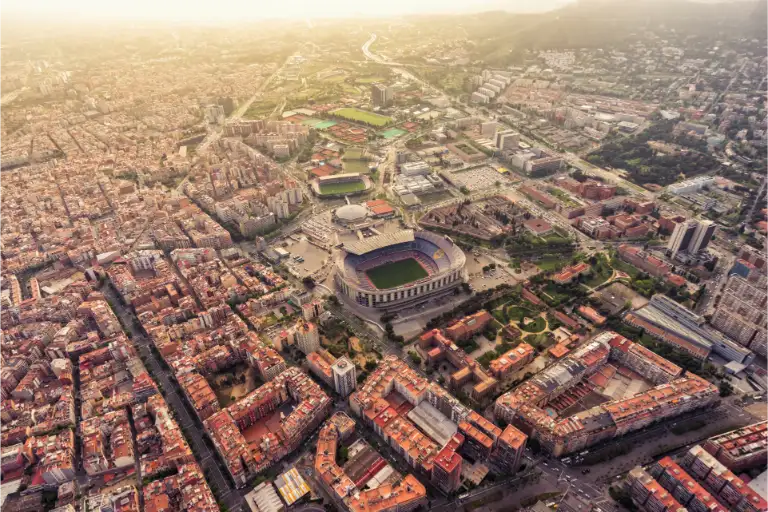
Citywide totals combine residential streets, beaches, nightlife districts, transport hubs, shopping areas and some of Europe’s busiest visitor destinations.
They also measure recorded offences rather than your individual probability of becoming a victim. Exposure changes with location, time, habits and whether somebody appears distracted.
This is why a useful housing search asks more than whether a district is statistically “safe.” It examines the street, the route home, the building entrance and the activity surrounding the property.
One City, Two Experiences
The Barcelona tourists describe is not the Barcelona residents use.
Visitors and residents occupy the same city but spend their time in different places, carry themselves differently and create very different levels of exposure to opportunistic theft.
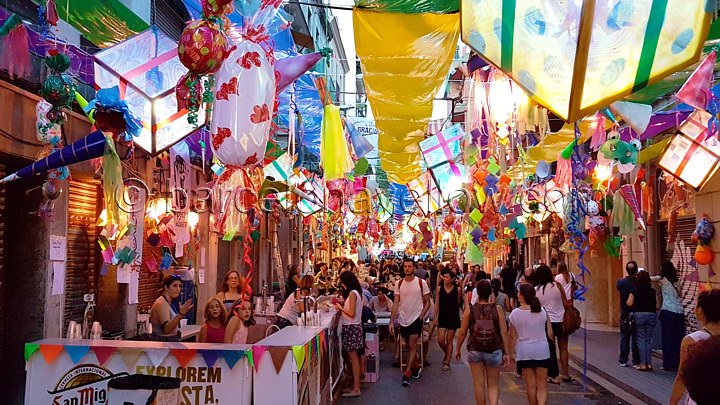
Valuable, distracted and standing in the predictable places.
Visitors concentrate around landmarks, beaches, nightlife streets, transport interchanges and busy restaurant areas—the same places that offer thieves a steady supply of unfamiliar targets.
They carry phones, passports, cameras and unfamiliar bags while checking maps, discussing directions and trying to understand what is happening around them.
Their risk is increased by behavior as much as location.
Familiar routes, ordinary errands and fewer openings.
Residents spend more time in supermarkets, schools, local cafés, neighborhood parks and the transport routes they already understand.
Their bags are usually closed. Their phones return to their pockets. They notice when somebody moves too close and do not leave valuables floating unattended around a terrace.
Awareness gradually becomes automatic rather than anxious.
The daily route
Home, school, work, the market and a familiar metro stop usually create less exposure than moving repeatedly through major visitor destinations.
The terrace
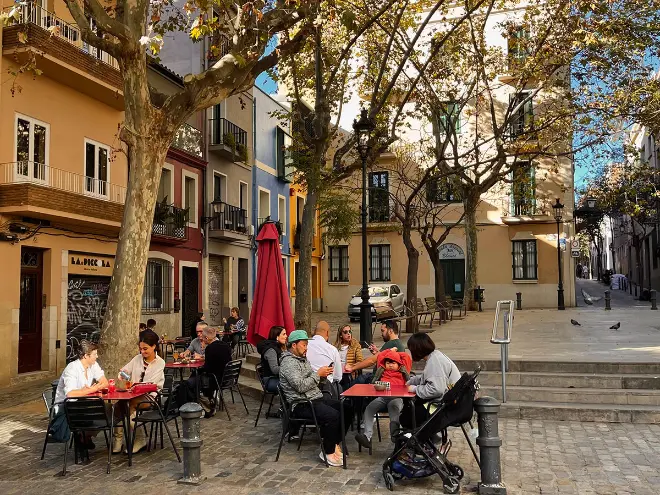
A local resident generally keeps a phone and bag physically controlled. A relaxed visitor may place both within easy reach of somebody passing the table.
The metro
Residents recognize crowded doors, unnecessary physical contact and distraction patterns. New arrivals are often still trying to determine the correct direction.
The neighborhood
Residential Barcelona is shaped by familiar shops, local families and recurring faces—not only the concentration of strangers found around major attractions.
From District to Doorway
Safety becomes specific at the address.
A neighborhood name is useful for orientation. It is not a reliable description of every street, building entrance or route home inside it. For a buyer or renter, the meaningful safety assessment begins after the district has been chosen.
Five minutes can change how Barcelona feels.
One apartment may face a well-used street with shops, lighting, regular pedestrian movement and a metro entrance nearby. Another apartment five minutes away may require walking through an empty passage, nightlife spillover or a poorly lit route late at night.
Neither observation automatically makes an address good or bad. A busy street may feel reassuring after dark while producing traffic and noise. A completely silent street may provide peace during the day while feeling isolated after midnight.
The goal is not to find the address with the least visible activity. It is to understand whether that activity creates comfort, inconvenience or unnecessary exposure for the way you will actually live.
The front door is only the final ten metres.
The route
Walk from the metro, bus stop or likely parking location at the time you expect to return home.
The entrance
Inspect lighting, visibility, door security, the intercom and whether somebody can enter unnoticed behind a resident.
The ground floor
A supermarket, restaurant, bar, vacant unit or tourist apartment can create completely different activity around the same building.
The neighbors
A functioning residential community often provides more useful reassurance than a prestigious postcode or polished lobby.
Do not buy the district’s reputation. Buy the reality outside the front door.
Our broader guide to choosing a Barcelona neighborhood explains how transport, daily routine, noise and housing type should be evaluated alongside safety.
Neighborhood Safety
“Safest” is usually the wrong neighborhood question.
Most established Barcelona neighborhoods support comfortable daily life. What changes is the balance between residential calm, public activity, tourism, nightlife and the habits each environment requires.
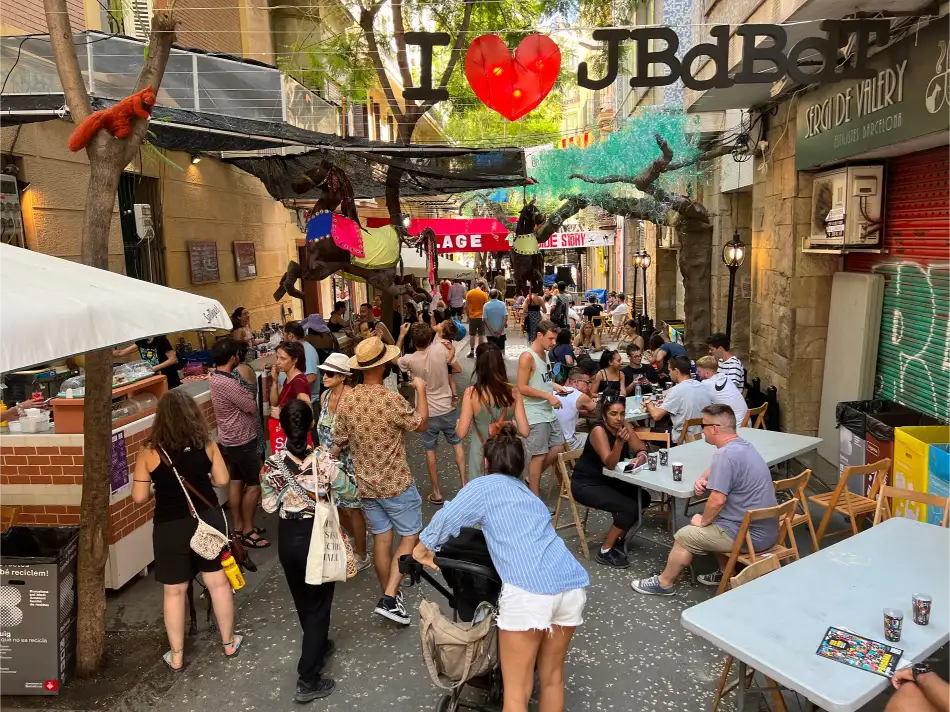
Lower tourist pressure and a more predictable daily rhythm.
Sarrià–Sant Gervasi, Pedralbes and much of Les Corts tend to feel calm, established and residential. Tourist-targeted theft is less central to ordinary life because visitor concentration is lower.
The trade-off is that some streets become very quiet at night. Buyers should still test lighting, transport, parking and the walk home rather than assuming that an expensive address answers every safety question.
Active streets that usually feel comfortable without becoming completely quiet.
Eixample, Sant Antoni and Gràcia combine strong residential life with shops, restaurants and regular street activity. Many people find that balance reassuring because routes remain used and visible into the evening.
Exposure changes around major landmarks, nightlife streets, festival areas and crowded metro stations. Here, the specific block often matters more than the district name.
Comfortable residential life beside a high-exposure public destination.
Poblenou offers strong family and professional life away from its busiest waterfront areas. Barceloneta places residential streets much closer to heavy visitor movement, nightlife and seasonal beach activity.
The primary concern is usually belongings rather than personal violence. Beaches, promenades and crowded summer transport create easy opportunities for unattended-property theft.
The strongest street-by-street variation in the city.
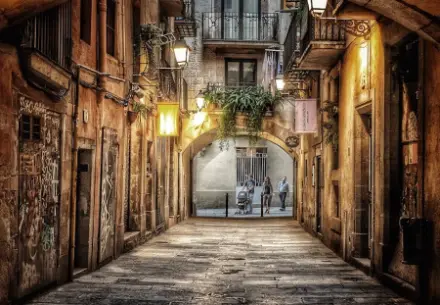
El Born, the Gothic Quarter and El Raval contain beautiful, culturally rich streets alongside visitor routes, nightlife, narrow passages and pockets that feel very different after dark.
These are not districts that can be responsibly labeled simply safe or unsafe. The floor, building entrance, immediate street and route home can transform the experience of properties only a few minutes apart.
Moving Through the City
Barcelona’s transport is safe. Crowded moments require attention.
The metro, buses, taxis and walking routes make Barcelona unusually easy to use without a car. The main transport risk is not the journey itself. It is the moment when crowding, luggage or confusion divides your attention from the valuables you are carrying.
Control the bag before the doors open.
Crowding increases around doors, escalators and major interchanges. Zip the bag, move it in front and return the phone to a controlled pocket before boarding or leaving the train.
The journey is calm; boarding creates the opening.
Buses generally feel comfortable and highly usable. Stay more attentive when passengers compress around the entrance, ticket reader or crowded central stops.
Door-to-door transport removes an unnecessary late-night walk.
Barcelona’s licensed black-and-yellow taxis are widely used and straightforward. Late at night, a taxi is often the sensible choice when the alternative is a long walk through empty streets.
Personal safety and property security are different questions.
Barcelona’s cycling network is extensive, but a bicycle left outside requires a serious lock. Whenever possible, store valuable bicycles inside rather than treating the street as overnight storage.
Thieves create confusion—or simply wait for it.
You may be checking the metro map, lifting luggage, helping a child, watching the station display or trying to leave before the doors close.
Somebody standing unusually close may be perfectly innocent. They may also be testing whether you will notice a hand near your bag.
Do not investigate the stranger first. Re-establish control of your possessions first.
Do not turn a safe city into an unnecessary personal experiment.
Late at night, stay on well-lit, active streets and avoid walking alone through empty routes simply because the map says the journey is technically possible. If the walk feels unnecessary, take a taxi.
Opportunistic Theft
Most theft begins with an opening—not a confrontation.
The thief usually does not want a fight. They want a phone, wallet or bag that can be removed before you fully understand that somebody has entered your space. The easier the opening, the lower their risk.
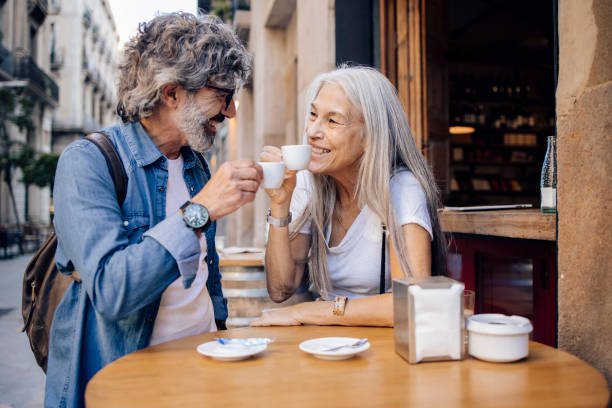
The method changes. The sequence usually does not.
Somebody enters your working space.
They approach the table, compress against you in a crowd, stand beside your luggage or create an apparently innocent reason to move closer.
Your attention moves away from the valuable.
A map, petition, spill, question, argument, touch or sudden offer of help gives your mind something else to process.
The object moves before the loss registers.
The phone, wallet or bag disappears into clothing, another hand or the surrounding crowd while you are still responding to the distraction.
Ordinary situations become useful when your attention is elsewhere.
Something covers the table.
A map, menu, newspaper or petition can hide the phone underneath while it is being removed.
Somebody becomes unexpectedly helpful.
Assistance with a ticket machine, luggage, directions or an invented problem may be designed to redirect your attention.
The crowd suddenly becomes physical.
Pressure around metro doors, escalators or a busy street can make deliberate contact feel accidental.
A person creates urgency.
Before responding to a spill, argument, accusation or commotion, establish control of your phone, wallet and bag.
Barcelona After Dark
Night does not make Barcelona unsafe. It changes the calculation.
Barcelona remains active well into the evening, and most residents do not treat darkness as a reason to stay home. But the sensible route at 21:00 may not be the sensible route at 03:00—especially when you are alone, tired or unfamiliar with the area.
The city is still fully in use.
Restaurants are serving dinner, shops may still be open and families, workers and residents continue using public transport and neighborhood streets.
In most established residential areas, this feels like ordinary public life—not a late-night risk period.
Activity becomes more concentrated.
Main streets, restaurant areas and transport routes may remain active while side streets begin to empty. Alcohol, nightlife and tiredness make belongings easier to lose and judgment less reliable.
Choose the route with lighting, visibility and other people—not necessarily the map’s shortest line.
A safe city does not make every choice equally sensible.
Empty passages, unfamiliar old-city streets, beach routes and long solitary walks provide fewer options if something feels wrong.
This is the moment to choose convenience over proving that the walk is technically possible.
The route is active, illuminated and familiar.
Stay on principal streets, keep your phone away while moving and avoid shortcuts through dark passages. If you are with other people and the route remains naturally used, walking may still be the most pleasant option.
The walk adds exposure without adding anything useful.
A licensed taxi removes the need to navigate an empty or unfamiliar route late at night. There is no prize for completing an avoidable forty-minute walk alone.
The hour matters—but it is not the only variable.
Company
A route that feels comfortable with friends may feel needlessly isolated when walked alone.
Familiarity
Knowing the active streets, taxi stands and transport alternatives removes uncertainty from the journey.
Condition
Alcohol, exhaustion, luggage or an uncharged phone can turn a manageable walk into a poor decision.
Street use
A lit street with open businesses and regular movement provides more visibility than a shorter route through empty passages.
Family Life
Barcelona can give children something increasingly rare: practical independence.
Walkable streets, public transport, neighborhood shops and active public spaces allow children to participate in daily life without depending on a parent’s car for every journey. That independence should be taught gradually—not assumed automatically.
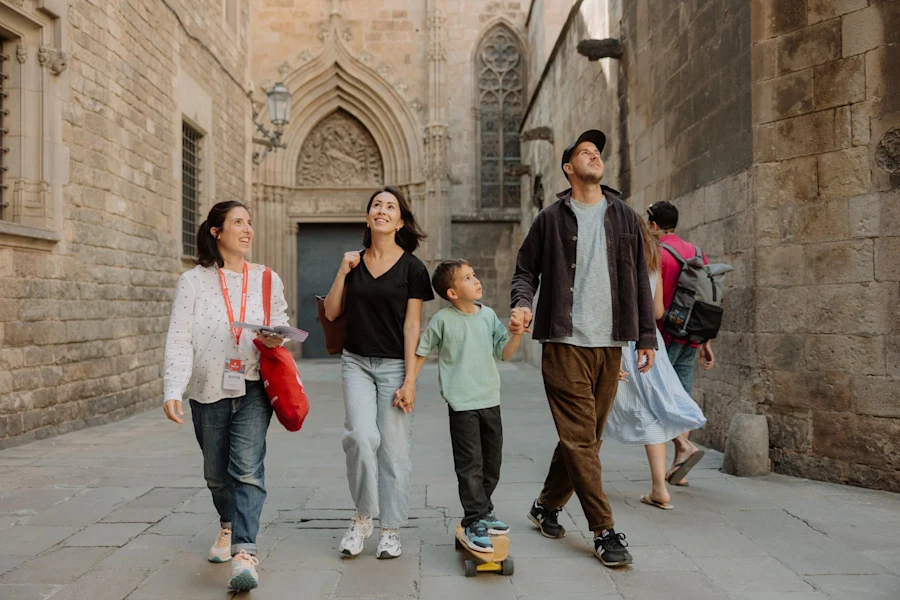
The goal is not to remove every risk. It is to teach children how to move through ordinary public life competently.
Barcelona’s plazas and pavements are shared by children, parents, older residents, shopkeepers and regular neighborhood activity. That social visibility can make family life feel reassuring.
Children still need clear rules about crossings, phones, bags, unfamiliar adults, metro behavior and what to do when a plan changes.
Independence works best when it develops through familiar routes and repeated practice, rather than being introduced for the first time during an emergency.
Teach the route before testing the child.
Walk the school, sports or friend route repeatedly. Identify safe crossings, active shops, transport alternatives and places where the child can ask for help.
Practice what happens if the metro stops, a bus is missed or a phone battery dies.
Allow independence while the route remains familiar.
Short local journeys can begin with a parent following at a distance, meeting at a fixed point or checking in when the child reaches an agreed destination.
The objective is not surveillance forever. It is to confirm that the child can follow the plan without constant instruction.
Independence should grow with judgment.
Teenagers may gradually combine walking, buses and metro journeys across a larger part of the city. The rules should change with the hour, destination and people accompanying them.
A familiar daytime journey is not automatically the same decision late at night.
Agree on the response before anything goes wrong.
One clear meeting point
Choose a visible, familiar place to meet if the family becomes separated in a crowded area.
One backup contact
Children should know who to call if a parent cannot be reached immediately.
One transport alternative
Teach a second bus, metro or taxi option when the normal route is unavailable.
One rule for valuables
Phones should not remain exposed while walking, waiting at a stop or sitting near the edge of a terrace.
A family-safe address is one that allows independence to expand without making every journey complicated.
Our guide to family-friendly Barcelona neighborhoods compares school geography, green space, community life and the daily routines that support children as they grow.
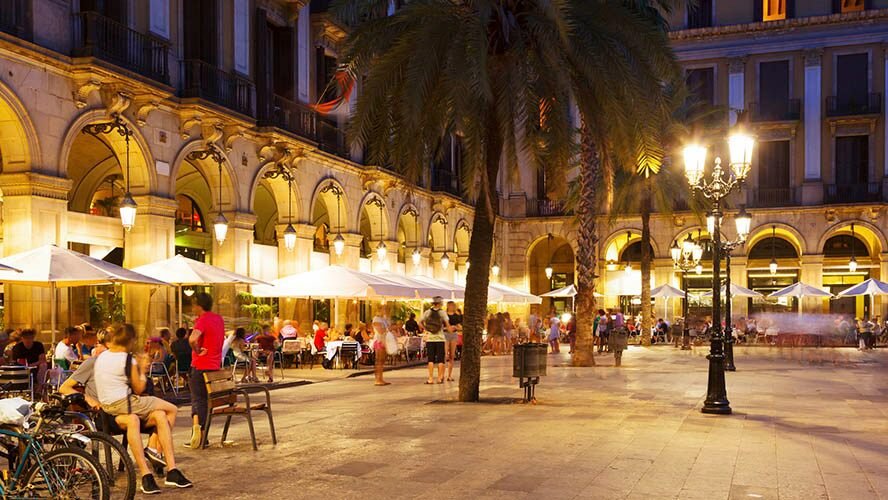
Safety in Retirement
Feeling safe means knowing ordinary life remains manageable.
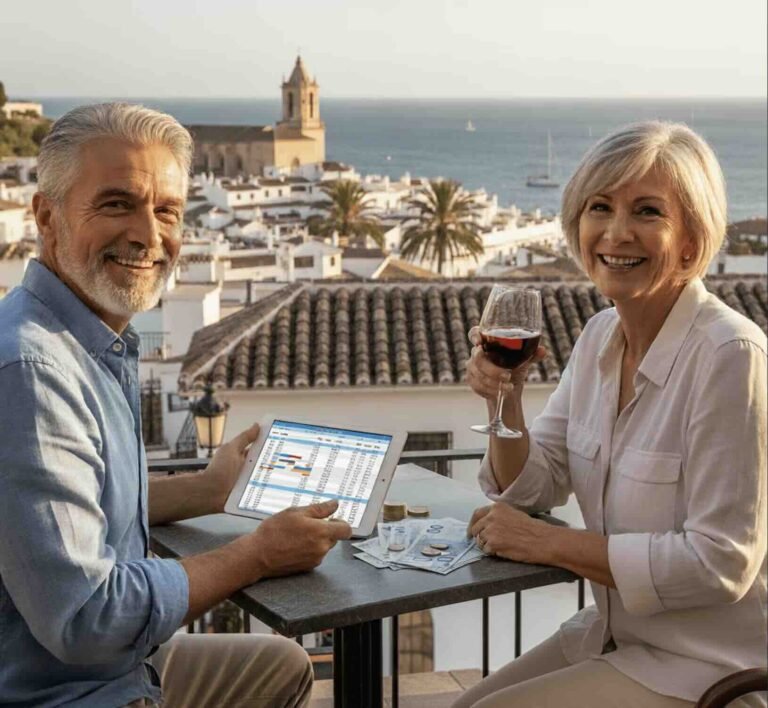
For retirees, safety is not limited to the probability of crime. It includes whether the pavement, building, transport and healthcare geography remain understandable on a day when energy, balance or confidence is lower than usual.
Can the neighborhood still be used comfortably?
Wide pavements, visible crossings, benches, local shops, dependable taxis and nearby public transport allow residents to remain active without requiring every journey to become a major plan.
Gradients, broken paving, summer heat and long distances between useful services can affect practical safety more than the district’s crime reputation.
Can you enter and leave without unnecessary difficulty?
Inspect the step from the pavement, entrance lighting, intercom, elevator, stair width and the complete route from the street to the apartment.
A prestigious property can become isolating when a small lift, steep entrance or unreliable access makes leaving home feel difficult.
Independence depends on the weak link in the journey.
The apartment may have a lift, but the metro station may require stairs. The street may be quiet, but the nearest pharmacy may be a difficult uphill walk.
A car may solve some journeys while creating a different problem around parking, garage access and the distance between the parking space and the front door.
The strongest retirement location provides more than one workable option: walking, transport, taxi and practical access to essential services.
Measure confidence along the entire route.
Pavement
Look for width, surface condition, shade, gradients, crossings and places to stop along regular walking routes.
Transport
Check whether the nearest station or stop is genuinely accessible, not merely close on a map.
Healthcare
Test the complete journey to the pharmacy, CAP, private doctor and likely hospital—not only the driving distance.
Building
Confirm the entrance, elevator and stairs remain practical while carrying shopping or managing temporary mobility limitations.
A safe retirement address protects independence—not only possessions.
Our complete guide to retiring in Barcelona compares neighborhood rhythm, healthcare access, mobility, housing and the practical realities of establishing long-term life here.
Is Barcelona a Safe Place to Live?