From The BHH Journal
Notes on buying property and living well in Barcelona.
Edition 004 Neighbourhood Edition March 2026
Poblenou
Creative • Coastal • Evolving • Future Barcelona
Poblenou is where Barcelona’s future is being built beside its industrial past. Its appeal lies in the contrast—and so do most of the buying decisions.
Poblenou is often introduced through a simple formula: technology, lofts and the beach. All three are part of the story, but none fully explains why this part of Barcelona feels so different from the rest of the city.
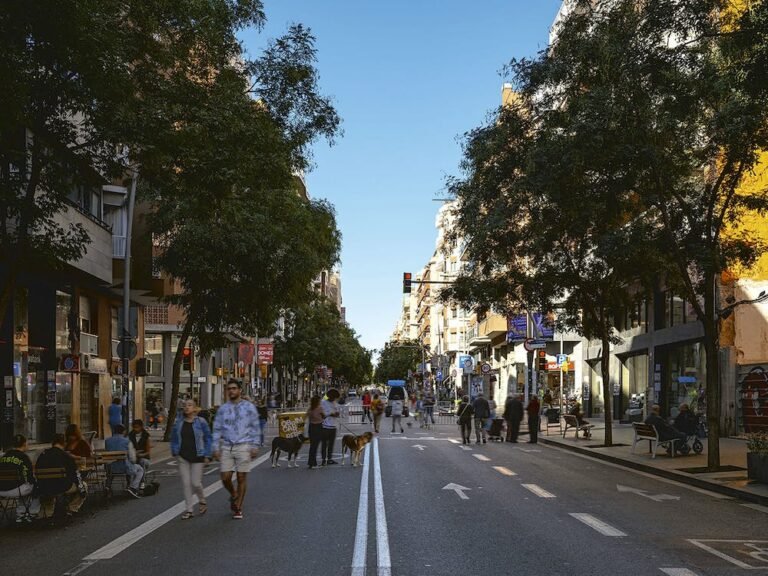
The older neighbourhood still carries the traces of an independent industrial community. Traditional apartment buildings, modest shops and familiar local routines remain visible between converted factories, design studios, coworking spaces and the offices of the 22@ innovation district.
Closer to the coast, the experience changes again. Wider streets, modern residential developments, terraces, parking and open sky create a version of Barcelona that feels more contemporary than historic. For some buyers, that is precisely the attraction. For others, it can feel less intimate than the city they imagined.
The beach adds another layer, but it should not dominate the decision. Residents still spend most of their time working, shopping, commuting, meeting friends and living ordinary weekday lives. Beach access is valuable when the surrounding street also works well in February—not only during a sunny weekend.
This edition examines the micro-areas, daily lifestyle, transport, property types, practical buying considerations and neighbourhood trade-offs that matter when deciding whether Poblenou belongs in a long-term property search.
For the complete purchase process—from the initial search and due diligence through arras and the notary—see the Guide to Buying Property in Barcelona .

The Poblenou Overview
Poblenou did not replace its industrial past. It built a new city around it.
Former factories, traditional homes, technology offices and modern residential developments now occupy the same neighbourhood. The result is one of Barcelona’s most interesting—and uneven— places to buy.
From Factory District to 22@
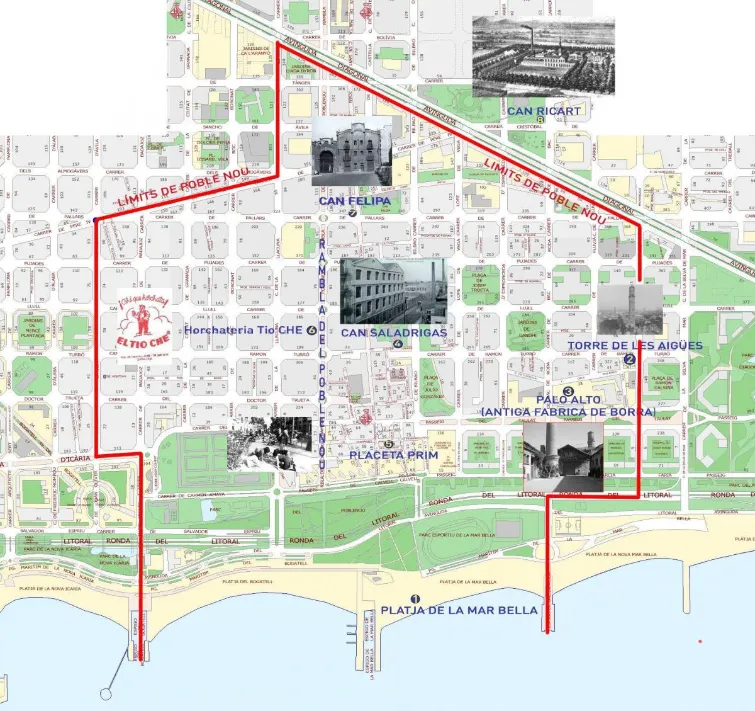
Poblenou was once widely described as “Barcelona’s Manchester” because of the factories, chimneys and brick warehouses that shaped its industrial economy. Many of those physical traces remain, even where the original uses have disappeared.
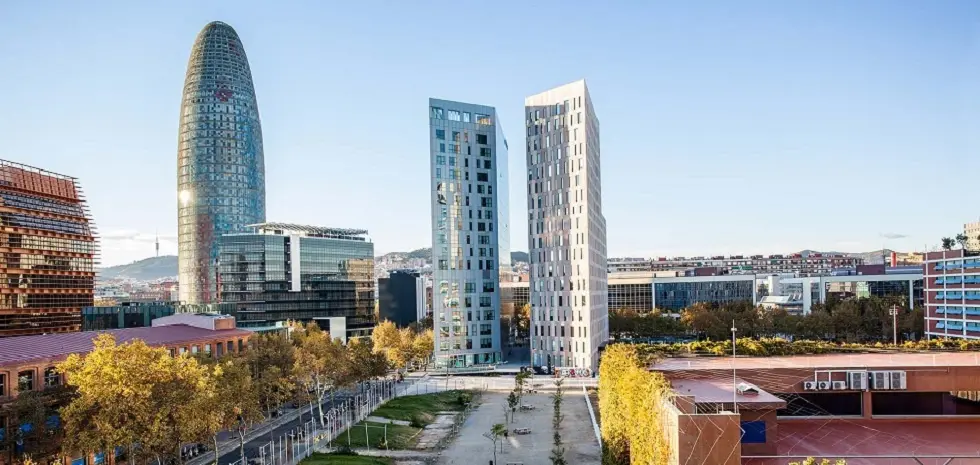
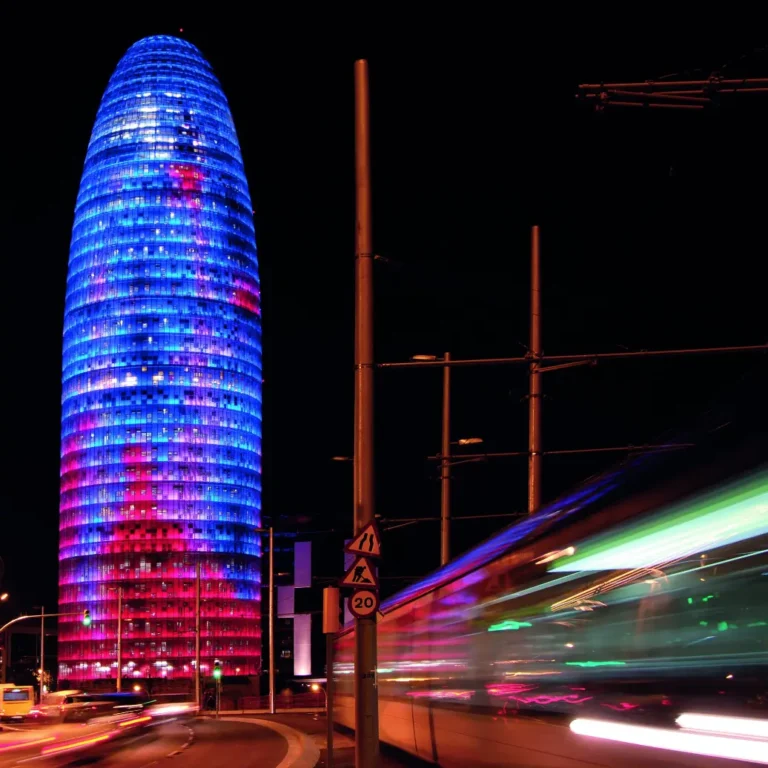
Around Pere IV, Llacuna and Glòries, former industrial buildings now sit beside design studios, coworking spaces, university facilities, technology companies and newer apartment developments associated with the 22@ innovation district.
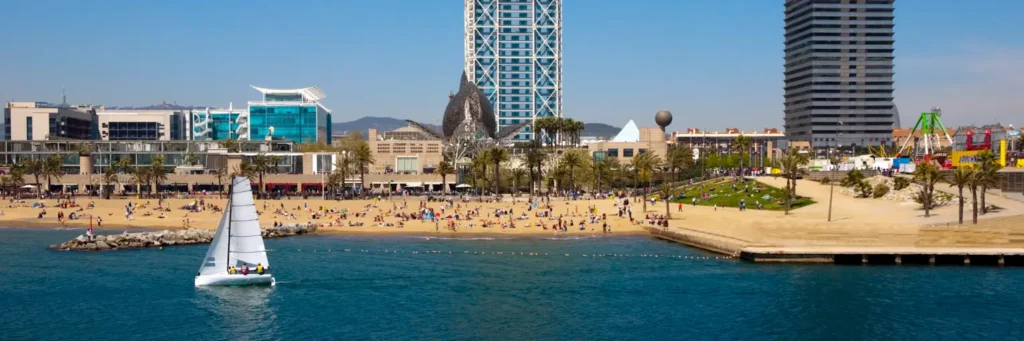
Closer to Bogatell and Mar Bella, the city opens toward the Mediterranean. Streets feel broader, the sky becomes more visible and beach access begins influencing both lifestyle and property pricing.
That contrast is Poblenou’s defining quality. It allows buyers to combine professional momentum, neighbourhood life and coastal access—but rarely in equal measure on every street.
Finding Your Corner
The many faces of Poblenou.
The neighbourhood name alone is not enough. Buyers need to decide whether they want traditional street life, active transformation, direct coastal access or a more practical connection to the wider city.
- If I wanted neighbourhood life
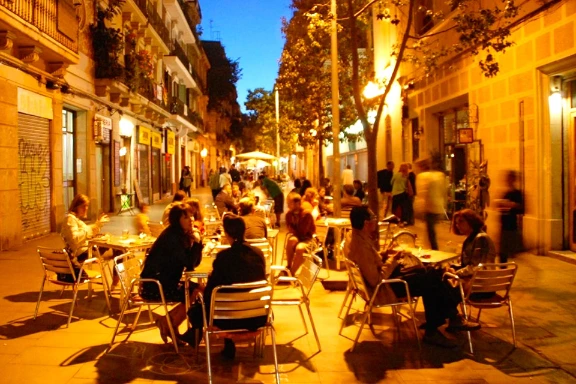
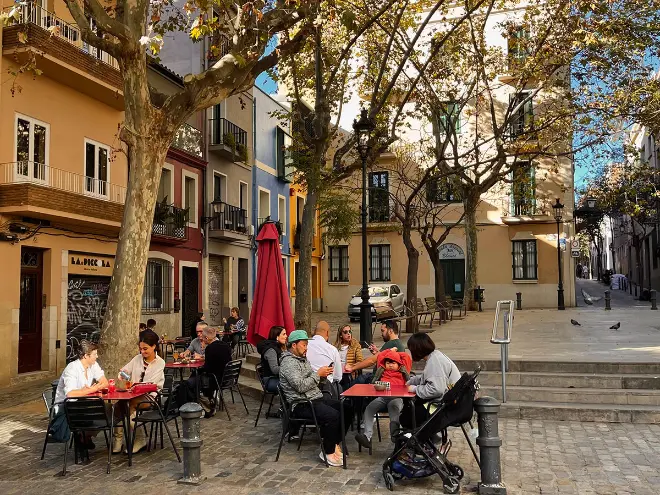
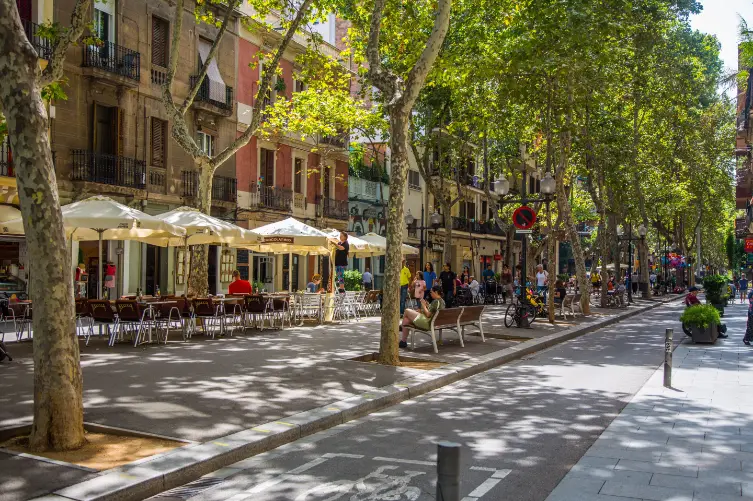
- Rambla del Poblenou remains the social spine. Cafés, terraces, bakeries, gelato shops and weekend strolls create the most familiar version of Poblenou. It feels established and lived in, although apartments directly on or beside the Rambla may experience more evening activity than buyers expect.
- If I wanted the transformation story
- Llacuna and the 22@ area place change outside the front door. Creative offices, coworking spaces, converted industrial buildings and modern developments make this the clearest expression of future-facing Poblenou. The trade-off is that construction, unfinished plots and uneven street activity can remain part of the experience.
- If I wanted the beach
- Bogatell and Mar Bella put the coastline into everyday life. Morning swims, cycling, running and after-work walks become genuinely convenient rather than occasional activities. Buyers should still distinguish between useful beach proximity and paying a large premium for an apartment whose surrounding street feels inactive outside summer.
- If I wanted stronger value logic
- The Glòries and Diagonal side deserves a wider comparison. Connectivity, redevelopment and access to major services can make this edge attractive, particularly when similar budgets buy more practical space. I would also compare nearby El Clot and Navas before assuming Poblenou offers the best overall value.
Everyday Poblenou
The neighbourhood works best when the beach is part of life—not the whole reason for choosing it.
Poblenou offers a combination that remains unusual in Barcelona: professional energy, bike-friendly movement, modern housing options and direct access to open coastline.
Morning
Local routines begin before the technology district does.
Bakeries, schools and neighbourhood cafés open across the older residential streets while runners and swimmers head toward Bogatell. The morning still feels more local than corporate.
Working Day
The 22@ economy changes the weekday rhythm.
Offices, coworking spaces, universities and studios bring a younger professional population into the neighbourhood. Around Llacuna and Pere IV, cafés and restaurants often respond more to working hours than to traditional residential patterns.
Afternoon
Cycling and walking make distant parts feel closer.
Poblenou’s flatter streets, bike lanes and wider pavements make moving between work, home, the Rambla and the coast relatively easy. The neighbourhood feels spacious by Barcelona standards, although some redevelopment zones remain less inviting on foot.
Evening
The coastline offers decompression rather than escape.
Residents walk, cycle, exercise or meet friends near the beach after work. The atmosphere can feel relaxed and distinctly Mediterranean, while the streets farther inland return to a more ordinary residential rhythm.
Frank’s Take
The beach may introduce buyers to Poblenou. The surrounding five blocks determine whether they will enjoy living there all year.
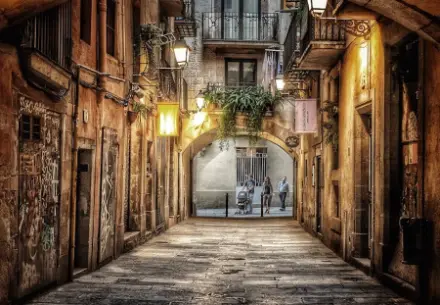
Buyers who prefer medieval streets and dense historic atmosphere should compare Poblenou with the Gothic Quarter . For a wider coastal-district comparison—including Diagonal Mar, Vila Olímpica and El Clot—see the Sant Martí guide .
Poblenou - Barcelona's New Investment Hotspot
Warehouse Apartments in Poblenou – Industrial Living Reinvented
Homes & Architecture
Poblenou offers more housing variety than its modern reputation suggests.
New developments, converted industrial spaces, beachside apartment blocks and traditional residential buildings can all appear within the same search. They should not be evaluated by the same standards.
- New builds
- Modern developments can remove many everyday compromises. Buyers may find lifts, parking, terraces, cleaner floor plans, stronger energy performance and shared facilities around 22@, Diagonal and the newer coastal developments. I would still compare community charges carefully and ask whether the amenities genuinely improve daily life.
- Loft conversions
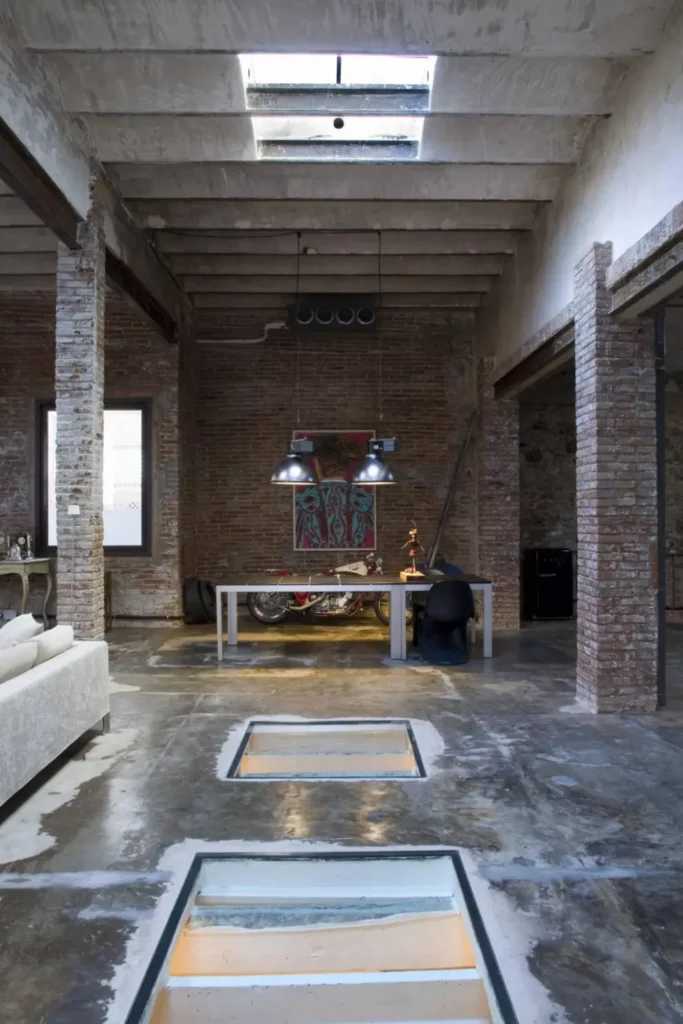
- Industrial style needs more due diligence than ordinary housing. High ceilings, open plans and original materials can create memorable homes, but buyers should verify residential status, the cédula de habitabilidad, acoustic separation, ventilation, insulation and any community restrictions affecting the intended use.
- Beachside apartments
- Coastal proximity improves lifestyle and accelerates wear. Apartments near Bogatell and Mar Bella may offer terraces, open views and easy access to the sea. Salt air, humidity and wind can age windows, shutters, railings, exterior metalwork and terrace waterproofing faster than buyers expect.
- Traditional buildings
- Older Poblenou often provides the most established street life. Low- and mid-rise residential buildings around Rambla del Poblenou can offer character, balconies and a stronger neighbourhood rhythm. The trade-offs may include smaller lifts, older installations, internal rooms and upcoming façade or roof work.
- Street-level reality
- Equal square metres do not create equal homes. Orientation, natural light, noise exposure, terrace usability, ceiling height and the exact relationship between the building and surrounding redevelopment can make two similarly sized apartments feel completely different.
Buying Notes & Pitfalls
The most attractive Poblenou properties often require the most careful document review.
The general Barcelona purchase sequence remains familiar: shortlist, viewings, offer or reservation, arras, legal due diligence and notary completion. Poblenou adds several property-specific questions that should be answered before the design or location creates unnecessary urgency.
- Loft legality
- Confirm that the space is legally approved for residential use. The land-registry description, cadastral information, planning status and habitability documentation should support the way the property is being marketed and the way the buyer intends to use it.
- Renovation quality
- Open-plan design can conceal technical compromises. Review ventilation, insulation, plumbing, electrical systems and acoustic separation. Large industrial volumes can be beautiful but costly to heat, cool and soundproof when the conversion was driven more by appearance than performance.
- Community minutes
- The building may contain costs the apartment photographs cannot show. Review planned façade, roof, terrace, lift and waterproofing works, along with disputes about commercial activity, tourist rentals or the use of shared spaces.
- Coastal exposure
- Beach proximity should trigger a more detailed maintenance check. Inspect exterior carpentry, shutters, terrace surfaces, drainage, railings and metal fixtures for signs of salt-air corrosion, moisture or deferred repairs.
- New-development claims
- Marketing language should be confirmed in the legal documents. Verify the registered surface area, terrace status, parking space, storage room, energy specifications, community facilities and any completion or licensing conditions rather than relying solely on sales material.
Buyers searching remotely can use the Virtual Private Home Tour service for on-the-ground property evaluation. For the wider purchasing sequence, review the Barcelona Buying Guide and Investment FAQs .
Transport & Connectivity
Poblenou feels spacious, but the right location keeps the wider city surprisingly close.
Metro, tram, cycling routes and access toward Glòries and Diagonal make much of Poblenou practical without a car. The exact balance changes by micro-area: beach proximity, office access and city-centre connections do not always improve together.
- Metro L4
- The yellow line provides the neighbourhood’s main metro spine. Poblenou, Llacuna, Bogatell and Selva de Mar stations serve different parts of the district. Buyers should walk the route from the exact property rather than relying on the nearest station shown on a listing map.
- Tram & Glòries
- The western and Diagonal edges connect into a broader transport network. Tram access and proximity to Glòries can improve connections toward other parts of Barcelona, while also placing buyers closer to major roads, commercial development and ongoing urban change.
- Cycling
- Poblenou is one of Barcelona’s more practical neighbourhoods for everyday cycling. Flatter streets, protected bike lanes and the beachfront route make cycling useful for commuting, exercise and moving between the Rambla, 22@ and the coast.
- Walking
- Wider streets create breathing room, but some routes remain less inviting than others. Established residential areas generally support comfortable daily walking. Office zones, larger blocks and active redevelopment can create stretches that feel quieter or more fragmented outside working hours.
- Parking
- A private space can materially improve the value of a modern apartment. Parking becomes especially useful near the beach and in newer developments where buyers expect easier vehicle access. Confirm whether the space is included in the same title or registered separately.
Frank’s Take
In Poblenou, I would not ask only how quickly I can reach the centre. I would ask whether the exact location makes my ordinary week easier.

Poblenou Real Estate Guide – Invest, Live & Thrive by the Beach
Why Poblenou is a Great Neighborhood for Families
Lifestyle Match
Who Poblenou Suits — And Who It Doesn’t
Excellent Fit For
- Remote workers and founders
- Creative professionals
- Beach-loving families
- Buyers wanting newer housing stock
- People prioritising cycling and outdoor life
Maybe Less Ideal If
- You want purely historic Barcelona charm
- You dislike construction or renewal zones
- You prefer quieter, older residential districts
- You want maximum value over lifestyle premium
If your priority is medieval streets and old-city atmosphere, compare Poblenou with the Gothic Quarter. If you want quieter residential living with strong transport and better value logic, also review El Clot or Les Corts.
Compare Neighborhoods
Nearby Barrios Worth Comparing
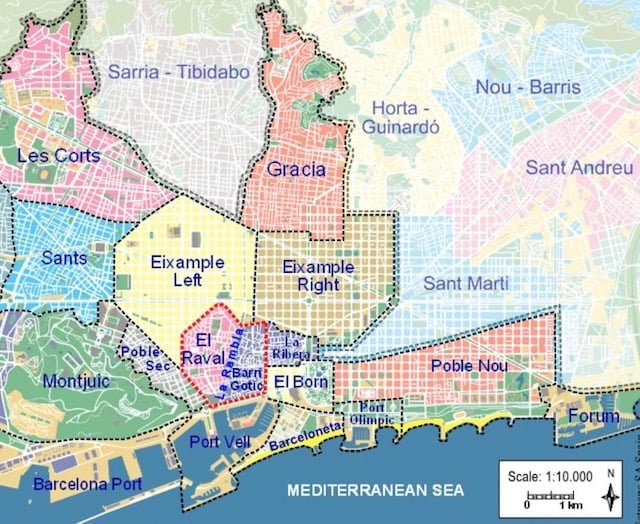
Poblenou sits inside the wider Sant Martí district, but the surrounding neighborhoods can feel completely different depending on your priorities.
Gràcia
More bohemian village energy, plazas, and traditional Barcelona character.
Gothic Quarter
Historic architecture, tourism, nightlife, and dense old-city atmosphere.
El Clot
Better value, stronger local feel, and calmer residential streets.
Navas
Underrated residential option with stronger affordability and family appeal.
FAQ
Frequently Asked Questions About Poblenou
Why is Poblenou called “Barcelona’s Silicon Valley”?
Is Poblenou safe for day-to-day living?
Can you help if I’m buying from abroad?
Where should I start if I’m new to buying in Spain?
Poblenou - Barcelona's New Investment Hotspot


Discover 22@: Barcelona's Innovation District
Inside the Transformation
22@ changed what Poblenou could become.
Former industrial land became a stage for technology, research, design and contemporary urban development. The transformation is real—but it remains far more complete on some blocks than others.
The 22@ Story
The original idea behind 22@ Barcelona was to transform underused industrial land into a mixed urban district built around knowledge, technology, design, research and new forms of economic activity.
That change is now visible throughout the street fabric. Former factories and warehouses sit beside university facilities, technology companies, creative studios, coworking spaces, contemporary offices and newer residential projects.
The district also changed Poblenou’s weekday population. Employees, students, founders and international professionals bring activity into cafés, restaurants, gyms and public spaces that were once shaped primarily by industrial or residential routines.
Yet 22@ is not a neatly finished business park. Older apartment blocks, protected industrial buildings, active construction, temporary gaps and established neighbourhood life continue to overlap. That unfinished quality is part of both its appeal and its risk.
For buyers, 22@ is therefore best understood as a force acting on Poblenou rather than a guarantee attached to every address inside it.
What It Changes for Buyers
The innovation economy affects demand, housing and the rhythm of the street.
The influence of 22@ extends beyond office buildings. It shapes who spends time in the area, which services appear, how developers position new housing and what sellers expect buyers to pay for the future.
- Employment demand
- Professional activity supports year-round housing interest. Technology companies, research institutions, universities, startups and creative businesses bring workers who may value being able to live near the office, cycle to work or combine hybrid work with access to the coast.
- Weekday rhythm
- Some streets feel more animated during working hours than at night. Cafés and restaurants around office clusters may become busy during the day and noticeably quieter after employees leave. Buyers should visit outside office hours to understand whether the location still feels residential and comfortable.
- Modern housing
- New development offers features uncommon in older Barcelona housing. Buyers may find lifts, parking, terraces, cleaner layouts, improved energy performance and shared amenities. These benefits should be weighed against community fees, construction quality and the maturity of the surrounding streets.
- Industrial reuse
- Converted buildings create character—and additional legal questions. Warehouses and former workspaces can become distinctive homes or mixed-use spaces, but residential status, habitability, insulation, ventilation and community rules require careful verification.
- Coastal advantage
- The combination of work and beach access remains genuinely unusual. Cycling infrastructure, open streets and proximity to Bogatell allow some residents to connect professional life with the coast. The value depends on whether both the work connection and beach access are practical from the exact address.
- Where I’d be careful
- Some asking prices already include a future that has not fully arrived. Sellers may use the 22@ story, planned redevelopment or nearby investment to justify a premium. I would assess the apartment and street as they function today, then treat future improvement as potential upside rather than guaranteed value.

Poblenou - Barcelona's New Investment Hotspot
Buyer Fit
22@ works best for buyers who want modern Barcelona to shape their everyday routine.
The strongest fit is not simply someone who works in technology. It suits buyers who value modern housing, cycling, beach access and professional energy more than historic atmosphere.
Who Feels at Home Here
Four buyer profiles—but four different reasons for choosing 22@.
The district can work for professionals, lifestyle buyers, families and investors, but only when the individual property and micro-location support the reason they came.
- Founders & remote workers
- The best fit is someone whose working life benefits from the surrounding ecosystem. Coworking spaces, technology offices, creative studios, cafés, universities and cycling routes can make the district especially convenient for founders, hybrid workers and professionals who want their workday close to home.
- Modern lifestyle buyers
- Newer buildings and beach access can remove compromises common elsewhere in Barcelona. Buyers may find lifts, terraces, parking, cleaner layouts and stronger energy performance while remaining close to Bogatell and Mar Bella. The fit is strongest when modern comfort matters more than historic façades or intimate old-city streets.
- Families
- Open space and practical housing can support family routines. Parks, cycling, the coast and newer residential developments may appeal to families seeking more breathing room. I would still prioritise schools, transport, evening street activity, storage and the usefulness of the floor plan over the general 22@ label.
- Long-term investors
- Professional demand can support a broad rental audience. Technology hiring, corporate relocations, international professionals and proximity to employment may support mid- and long-term demand. The investment case still depends on legal use, purchase price, community costs, building quality and whether the unit appeals beyond one narrow tenant profile.
Consider Another Area If
22@ is a strong choice—but only for the version of Barcelona it actually offers.
Buyers drawn to historic façades, old streets and a deeper sense of traditional Barcelona should compare Gràcia or the Gothic Quarter .
Buyers who want a calmer residential setting, less active regeneration and potentially stronger value logic should also compare El Clot and Navas .
The point is not that one area is objectively better. It is that 22@ rewards buyers who genuinely want change, modernity and professional energy around them.
Buyer Profiles
Who 22@ Suits Best
22@ is strongest for buyers who want modern Barcelona: work energy, beach access, newer housing, cycling, cafés, coworking, and long-term growth. It is less ideal if your dream is old-city romance or a quiet traditional village feel.
Tech Buyers
Founders & Remote Workers
Ideal if your life revolves around coworking, startups, design studios, cafés, cycling, and quick access to 22@ offices.
Lifestyle Buyers
Modern Beachside Living
Strong fit if you want newer buildings, lifts, terraces, parking, cleaner layouts, and beach access without Barceloneta’s intensity.
Families
Space + Future Growth
Works for families who value parks, cycling, beach access, modern buildings, and a more open urban layout.
Investors
Long-Term Demand
Attractive for investors targeting corporate relocations, tech hiring, international professionals, and mid-term rental demand.
Consider Another Area If
If you want historic façades, village plazas, or a deeply traditional Barcelona atmosphere, compare Gràcia or the Gothic Quarter. If you want calmer value and less regeneration noise, compare El Clot or Navas.

Navigating Poblenou: Your Guide to Transportation in Barcelona's Trendy District
Transport & Connectivity
Getting Around in Poblenou
Poblenou works well because daily movement is easy. Between Metro L4, tram links, buses, cycling routes, taxis, and walkable streets, the neighborhood gives buyers strong access to the beach, 22@ offices, Glòries, El Born, Barceloneta, and the wider city.
Metro
L4 Yellow Line
Poblenou, Llacuna, Selva de Mar, and Bogatell connect the neighborhood to Barceloneta, El Born, and central Barcelona.
Cycling
One of the Best Areas
Flat terrain, protected lanes, Bicing stations, and beachside routes make cycling genuinely practical here.
Tram & Bus
Diagonal Links
The T4 tram and key bus routes help connect Poblenou with Glòries, Diagonal Mar, Fórum, Sants, and Plaça Catalunya.
Taxis & Cars
Useful but Secondary
Taxis, Uber, and Cabify are easy to find, but most daily routines work well without needing a car.
Lifestyle Advantage
Poblenou Is Especially Strong on Foot
The strongest micro-areas let you walk easily between Rambla del Poblenou, Bogatell Beach, cafés, gyms, coworking spaces, supermarkets, and metro stops. That easy daily movement is one of the reasons Poblenou feels so livable compared with more fragmented coastal areas.
Poblenou - Barcelona's New Investment Hotspot

Lifestyle Fit
Poblenou for Remote Workers, Tech Professionals & Creative Buyers
Poblenou is one of the easiest neighborhoods in Barcelona to recommend to buyers who want a modern, flexible lifestyle built around good cafés, coworking, cycling, beach access, strong transport, and newer housing stock.
Daily Rhythm
Work + Lifestyle Balance
Poblenou fits buyers whose week moves between laptop work, meetings, gym sessions, bike rides, cafés, and evening walks by the sea.
Housing Advantage
Modern Home Features
Compared with older central districts, buyers here have better odds of finding terraces, lifts, parking, insulation, and work-from-home-friendly layouts.
22@ Effect
Future-Facing Energy
The wider 22@ ecosystem gives the neighborhood a more international, creative, and professionally driven feel than many other parts of Barcelona.
Compare Other Areas
Buyers wanting a more historic or romantic Barcelona often still prefer the Gothic Quarter or Gràcia. Buyers looking for quieter value and less regeneration activity may feel more comfortable in El Clot or Navas.
Poblenou - Barcelona's New Investment Hotspot

Thinking of moving to Poblenou? Let Barcelona Home Hunter match you with the perfect home in Barcelona’s most exciting neighborhood.
Poblenou - Barcelona's New Investment Hotspot

Market Snapshot
Poblenou Real Estate Market
The Poblenou property market continues to attract buyers looking for a rare Barcelona combination: modern housing stock, beach lifestyle, strong rental demand, and long-term urban growth. Demand remains especially strong around 22@, Bogatell, and the beachfront corridors.
Pricing
Premium but Competitive
Prices often sit above the Barcelona average, especially near the beach and 22@, but buyers still find stronger value than some premium central districts.
Housing Stock
Modern Homes + Lofts
Buyers can choose between new developments, industrial loft conversions, beach-adjacent apartments, and traditional low-rise blocks.
Rental Demand
Strong Professional Tenant Base
Demand is supported by relocation professionals, remote workers, tech hiring, international talent, and beach-oriented lifestyle renters.
Investment Outlook
Long-Term Growth Story
Buyers are investing not only in rental yield, but also in beach scarcity, corporate demand, and continued district regeneration.


Poblenou – Barcelona’s New Investment Hotspot
Explore More Barcelona Neighborhoods
Related Guides
Coastal District
Sant MartíBeach access, 22@ growth, modern buildings, and strong long-term demand.
Area Comparison
Choosing a NeighborhoodCompare Barcelona districts by lifestyle, price, atmosphere, and buyer fit.
Quiet Premium Living
Les CortsResidential comfort, strong transport, family appeal, and calmer city living.
Local Barcelona
El ClotPractical, connected, and often better value than nearby trendier districts.
Food & Atmosphere
Poble-secCreative energy, tapas culture, and one of Barcelona’s best evening atmospheres.
Thinking About Buying in Poblenou?
Poblenou is one of Barcelona’s strongest fits for buyers who want modern living, beach access, strong transport, and future-facing real estate demand. The key is choosing the right micro-area, building style, and distance from the 22@ core or beach.
We help international buyers compare Rambla de Poblenou vs beach edge, 22@ new-builds vs loft conversions, long-term rental strength, and realistic resale potential before making an offer.
Best for buyers comparing Poblenou vs Barceloneta vs Eixample, 22@ relocation moves, or long-term rental investments.