Barcelona Landmark Redevelopment
Europe’s largest football stadium is open again—but the transformation is not finished.
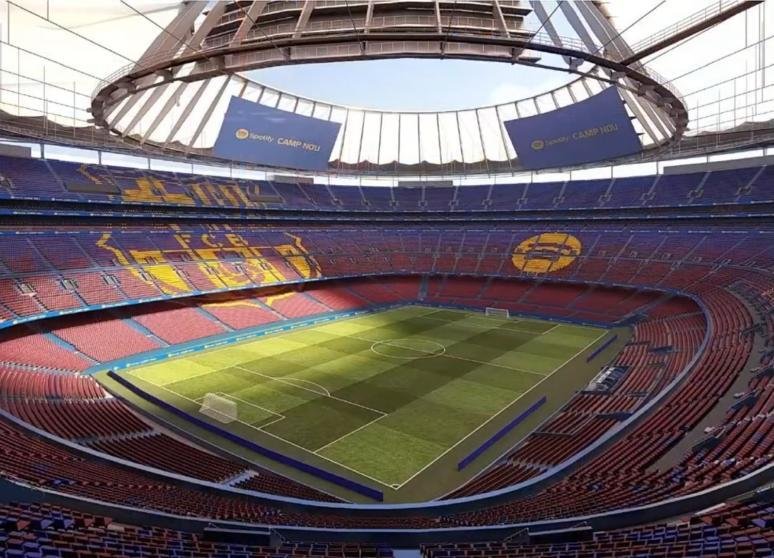
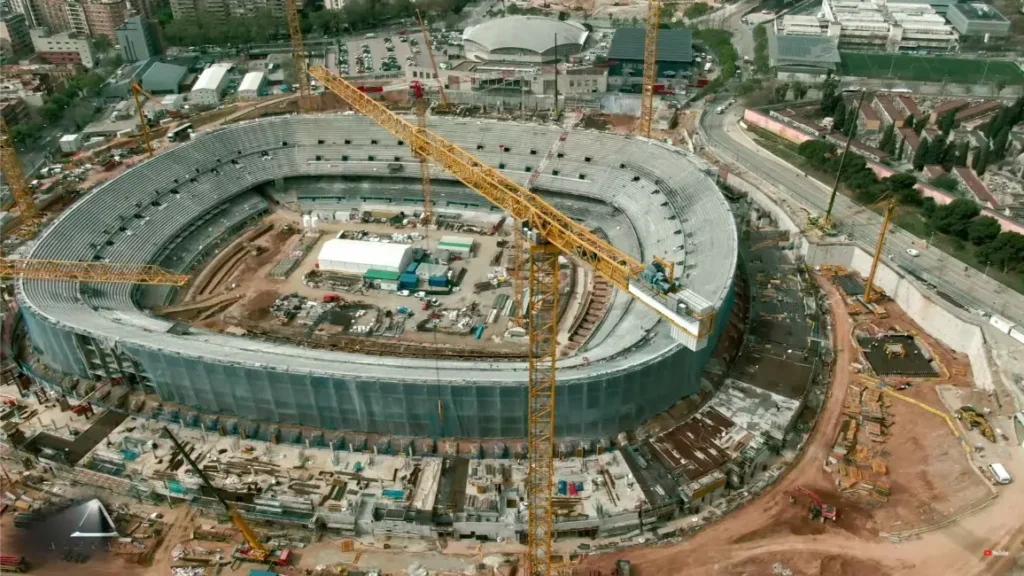
The redevelopment of Spotify Camp Nou is one of Europe’s most ambitious stadium projects. FC Barcelona has returned to its historic home, but matches are being played while major construction continues around the functioning stadium.
When completed, the rebuilt ground is expected to accommodate approximately 105,000 spectators, with a new third tier, covered seating, modern hospitality facilities and significantly improved accessibility.
Where Things Stand
Spotify Camp Nou construction status in 2026
FC Barcelona returned to Spotify Camp Nou on November 22, 2025, playing Athletic Club after more than two years away from the stadium.
The ground initially reopened with a restricted capacity of 45,401 spectators. During the main closure, Barcelona played its home matches at the Estadi Olímpic Lluís Companys on Montjuïc.
In March 2026, Barcelona City Council granted the occupancy licence for Phase 1C. The opening of the North Goal and additional hospitality areas increased the stadium’s permitted capacity to 62,652 spectators.
Matches have returned, but construction remains visible. Work continues on the third tier, roof, façade, hospitality areas and surrounding public spaces.
- Location: Les Corts, Barcelona
- Club: FC Barcelona
- Previous capacity: 99,354
- Main contractor: Limak Construction
- Part of the wider Espai Barça project
- Opening is progressing in approved phases
Why the Work Was Necessary
Why is Camp Nou being rebuilt?
Camp Nou opened on September 24, 1957. It was expanded for the 1982 FIFA World Cup and modified again during the 1990s, but much of its infrastructure remained rooted in an earlier era.
Although it remained one of football’s most recognizable venues, the old stadium had fallen behind newer European grounds in accessibility, technology, hospitality, spectator comfort and commercial facilities.
Better spectator experience
Improved seating, circulation, entrances, food service and protection from Barcelona’s sun and rain.
Modern accessibility
New lifts, escalators and accessible routes designed to make the enormous venue easier to navigate.
New commercial facilities
More hospitality areas, restaurants, shops and premium seating intended to generate year-round revenue.
Closer city integration
Redesigned public spaces should connect the stadium complex more naturally with Les Corts and the surrounding city.
The New Stadium
Main features of the Spotify Camp Nou expansion
Approximately 105,000 seats
The completed stadium is expected to hold around 105,000 spectators, compared with 99,354 before construction began. The increase comes primarily from the rebuilt third tier.
A roof over the seating areas
A large new roof is designed to protect spectators while supporting lighting, audio, display and other stadium technology.
VIP and hospitality ring
New lounges, boxes and premium seating between the second and third tiers will become an important source of matchday and event revenue.
Technology and connectivity
The plans include improved Wi-Fi, audiovisual systems, access controls, security technology and a more modern visitor experience.
Improved visitor facilities
New restaurants, retail areas, concourses and museum facilities are intended to keep the complex active beyond matchdays.
Mediterranean character
Despite the extensive redevelopment, the design is intended to preserve the open character associated with the historic Camp Nou.
Costs and Financing
How much will the Spotify Camp Nou renovation cost?
The cost is more complicated than a single headline number. Earlier plans commonly placed the Camp Nou stadium work at around €900 million, while the wider Espai Barça redevelopment was supported through approximately €1.45 billion in financing.
The wider project includes more than the construction visible inside the stadium. Financing expenses, inflation, additional structural work and delays can all affect the eventual total.
For that reason, older claims that the completed redevelopment will cost exactly €1.07 billion should no longer be treated as definitive.
Key Milestones
Spotify Camp Nou construction timeline
Camp Nou officially opens as the new home of FC Barcelona.
Preparatory work begins and the stadium is renamed Spotify Camp Nou under the club’s sponsorship agreement with Spotify.
The main redevelopment begins after the 2022–23 season. FC Barcelona relocates its home matches to Montjuïc.
FC Barcelona returns to Camp Nou with an initial operational capacity of 45,401 spectators.
Phase 1C receives its occupancy licence, increasing available capacity to 62,652.
Construction continues on the new third tier, roof, façade, premium facilities and surrounding public areas.
Spotify Camp Nou is scheduled to host the UEFA Champions League final.
Completion Date
When will Spotify Camp Nou be completely finished?
Several earlier target dates have passed, so another precise completion prediction should be treated cautiously.
The stadium is open for matches, but the current reopening is phased. Additional seating and facilities can only be activated after construction milestones, safety inspections and municipal approvals have been completed.
The outstanding work includes major elements of the third tier, roof, external areas and hospitality facilities. The stadium will therefore continue evolving even while FC Barcelona plays there.
Important: “Reopened” does not mean “completed.” Visitors should check FC Barcelona’s official information before attending because capacity, entrances, tours and available areas may change as work progresses.
Planning a Visit
Can you visit Spotify Camp Nou during construction?
FC Barcelona is playing matches at Spotify Camp Nou, but access remains affected by the ongoing work. Some sections may be closed, and the traditional stadium-tour experience may be modified.
Match visitors should allow additional time for security, temporary pedestrian routes and busy public transport. The closest metro stations include Les Corts, Maria Cristina, Palau Reial, Badal and Collblanc.
For current tickets, entrances, opening arrangements and visitor information, consult the official FC Barcelona website .
Beyond the Stadium
What does the redevelopment mean for Les Corts?
Camp Nou is not an isolated attraction. It is one of the defining landmarks of Les Corts, a well-connected residential district close to business areas, universities, international schools and western Barcelona.
The redevelopment should bring improved public spaces, new commercial activity and larger crowds to the area. Buyers should balance those benefits against matchday noise, congestion, street closures and changing pedestrian patterns.
If you are considering buying near Camp Nou, the stadium is only one part of the decision. The right neighborhood should also fit your daily routine, budget, transport needs and long-term plans.
Spotify Camp Nou: Expansion and Construction Details